
How to close your Costa Dorada home for the winter.
Most second homes on the Costa Dorada stay closed from October to Easter. A few hours of preparation before you leave saves most of the problems we find in spring: damp wardrobes, a stopped fridge, a blocked drain, a letterbox overflowing. Here is what to do, room by room, and why.
Should I turn off the water at the main valve?
If nobody will enter the home for months, yes: closing the main stopcock is the simplest protection against a burst hose or a running cistern. If someone visits regularly, many owners leave it on so taps can be run and toilets flushed on each visit, and close it only between visits.
Check first what else hangs off that valve. In many houses the garden irrigation, the pool top-up or a water softener share the supply, and closing it will stop them too.
Closing the water does not stop the other slow problem: traps drying out. The water sitting in the U-bends of sinks, showers and floor drains evaporates over a few weeks, and then smells from the drains come up into a closed home. Running every tap and flushing every toilet on each visit keeps them full.
What should I leave switched on?
Leave on only what needs power: a fridge you keep running, an alarm, a router or cameras, and a dehumidifier if you use one. Switch off the electric water heater and unplug the television, the oven and small appliances. A fridge you switch off should be emptied, cleaned and left with its door ajar.
A fridge left running with food in it is a risk if nobody checks it. After a storm a power cut can trip the main switch on the fuse board, the fridge stops and the food spoils. An empty, clean fridge with the door wedged open avoids that and the mould that grows in a closed one.
Take a photo of the fuse board with the switches in the right position before you leave. It makes it much easier to tell someone, from abroad, which switch to put back up.
How do I stop damp and mould in a closed flat by the sea?
Let air move and give damp somewhere to go. Leave interior doors, wardrobes and kitchen cupboards open, pull mattresses away from walls and don't store clothes in plastic. A dehumidifier with a hose draining into a sink works without anyone emptying it, and regular airing does the rest.
Sea air carries moisture, and a home with the shutters down and no heating keeps it. Ground-floor flats and north-facing rooms are usually the first to show black spots on ceilings, at the back of wardrobes and behind sofas.
Moisture absorber boxes help in small rooms but fill up within weeks. What makes the real difference is opening the windows for twenty or thirty minutes on a dry day, every visit.
Shutters, awnings and terrace
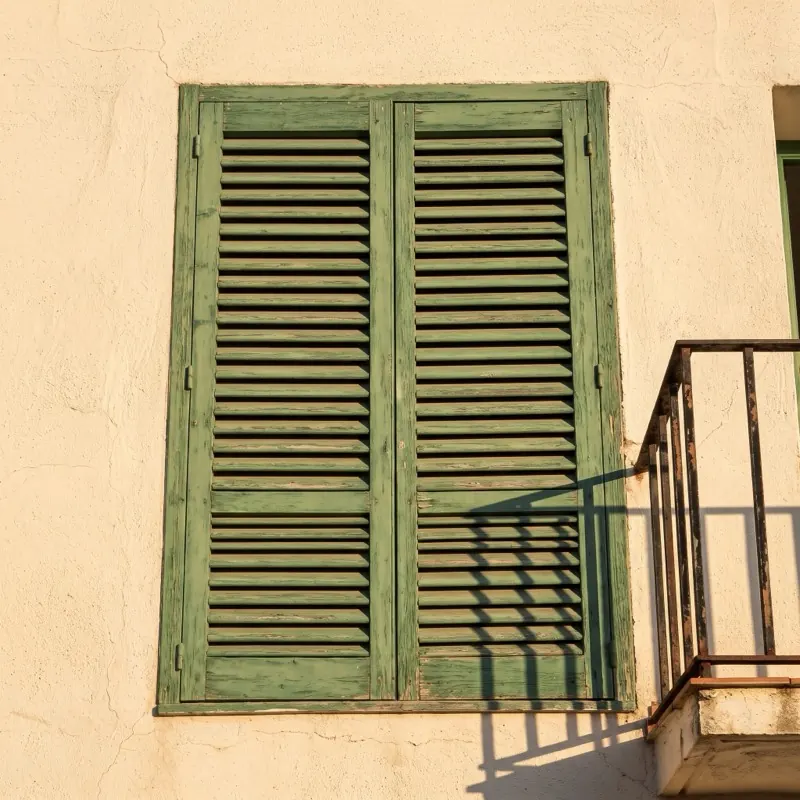
Roll the shutters down, retract the awnings fully and fasten them, and bring cushions and anything light indoors. Sweep the terrace and clear its drains before you go: a drain blocked with leaves, pine needles or sand is the most common cause of water coming in under a terrace door.
Furniture that stays outside should be grouped against a wall or tied down. Autumn storms bring strong east winds to this coast, and a loose parasol or plastic chair can break a window or end up on the neighbour's terrace.
What about the garden and the pool?
Set the irrigation timer to its winter programme and fit a fresh battery. Don't empty the pool: keep the water at its normal level, give it a winter treatment, reduce the pump hours and cover it if you can. Both need checking after storms and during dry spells.
An empty pool can be damaged by the ground around it and is harder to bring back in spring. A covered pool with winter chemicals and a short daily filtration cycle usually comes through the winter with clear water. Your pool company can tell you the right programme for your filter.
Who will collect the post and keep the keys?
A full letterbox tells everyone the house is empty, and some letters matter. Ask for bills by email, then have someone empty the box on a fixed schedule. Leave one set of keys with a person you trust, never under a pot or in a box labelled with the address.
Whoever holds your keys should know the alarm code, where the main valve and fuse board are, and who to call for repairs. Write it down once and give them a copy.
Does my home insurance require regular checks?
It may. Many home insurance policies ask that an empty home be checked regularly, or limit cover after a certain period without anyone inside. Read the conditions of your own policy, or ask your insurer, before you leave the home closed for the winter.
If your policy does ask for checks, keep a record of each one: dated photos and a short note are useful if you ever need to make a claim.
Checklist: closing up for the winter
Print it or keep it on your phone.
- Empty, clean and either keep running or switch off the fridge, leaving the door ajar if off.
- Throw away or take with you anything perishable in the cupboards.
- Switch off the electric water heater.
- Unplug the TV, oven, microwave and small appliances.
- Photograph the fuse board with the switches in their normal position.
- Decide on the main water valve and close it if no one will visit.
- Run every tap and flush every toilet before you go.
- Open interior doors, wardrobes and cupboards; pull mattresses off the walls.
- Set up the dehumidifier with its hose draining into a sink, or place absorber boxes.
- Sweep the terrace and clear every drain and gutter you can reach.
- Retract and fasten the awnings; bring cushions and light furniture indoors.
- Roll down the shutters and close every window properly.
- Set the irrigation to its winter programme and change the timer battery.
- Give the pool its winter treatment, reduce the pump hours and cover it.
- Switch bills to email and arrange for the letterbox to be emptied.
- Leave a set of keys and your notes with someone you trust.
- Check what your insurance policy says about empty homes.